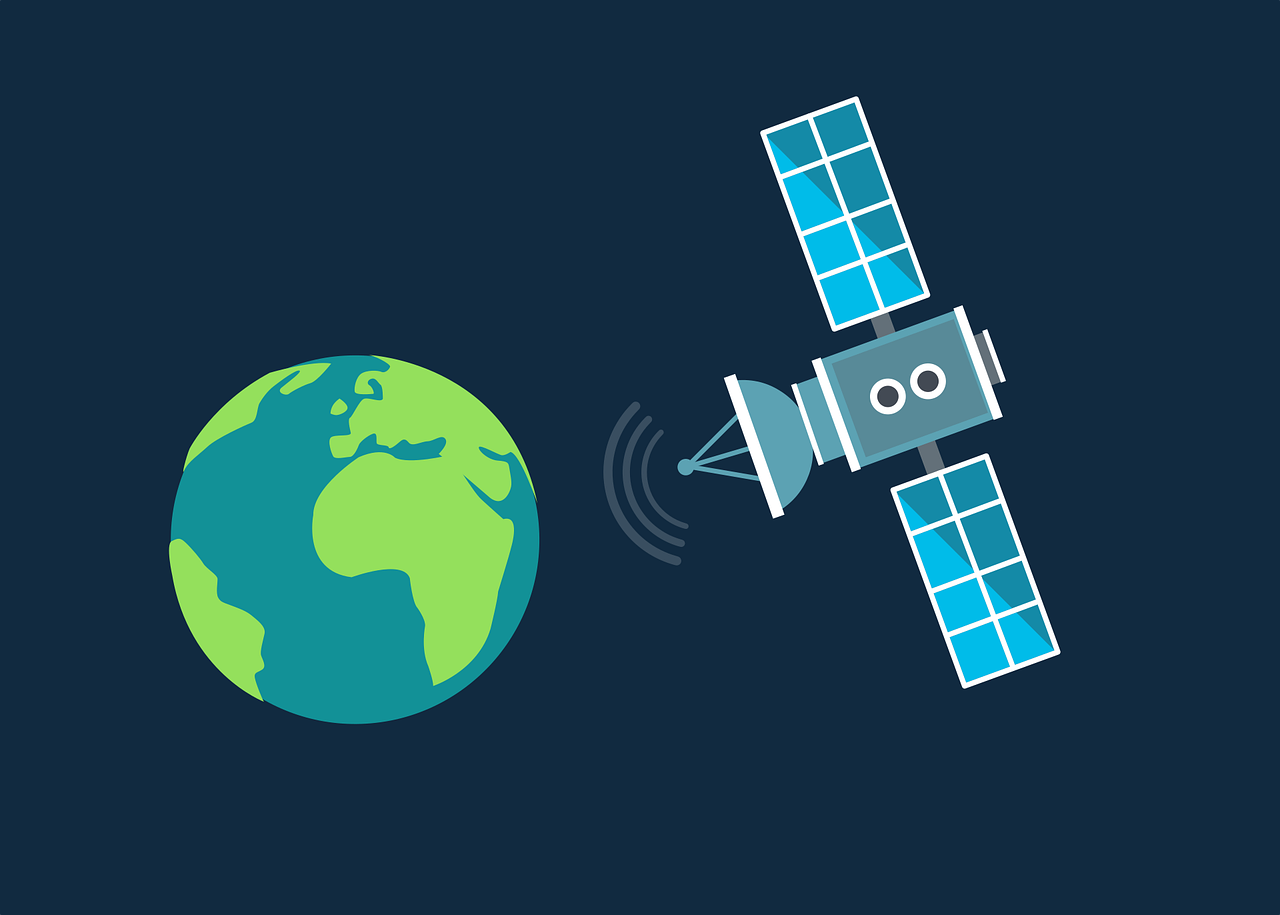
Satellite communication
Satellite communication on mobile devices
In addition to the well-known GPS functionality, which uses a network of satellites to provide accurate location and timing information to mobile devices, satellite communication is increasingly being deployed. New technologies such as “direct-to-cell” make it possible to connect standard smartphones directly to satellites, providing a continuous and reliable internet connection—even in areas without traditional network infrastructure.
- GPS:Uses satellites for location determination and navigation, which is essential for many mobile applications.
- Direct-to-Cell Communication:Allows mobile phones in remote or poorly covered areas to connect directly to satellites without additional hardware.
In the future, this development will have a major impact on how we communicate. It means that everyone, regardless of location, can have access to data, voice, and emergency communication. This paves the way for improved emergency services, nationwide connectivity, and the support of advanced applications such as the Internet of Things, autonomous vehicles, and global real-time communication.
Starlink
Starlink is SpaceX’s satellite internet system that delivers broadband internet worldwide via a constellation of thousands of low-earth orbit satellites. Thanks to its low latency, the system is very well suited for applications such as videoconferencing, gaming, and real-time communication—especially in remote areas where traditional networks are difficult to implement.
Underlying technology
The operation of Starlink is based on advanced technologies that ensure a fast and reliable connection:
- Phased Array Antennas:These antennas transmit and receive targeted signals, enabling efficient communication between the satellites and Earth.
- Laser Inter-Satellite Links:These links connect the satellites with each other and ensure fast data transfer within the constellation.
- Direct-to-Cell Functionality:Some satellites are equipped with an eNodeB modem, allowing them to act as mobile base stations so that standard smartphones can connect directly without extra hardware.
Market competition
In addition to Starlink, several players are focusing on similar technologies or developing complementary solutions:
- AST SpaceMobile:This American company is developing a satellite constellation (including the BlueWalker and BlueBird satellites) that connects unmodified smartphones directly to the internet.
- Lynk Global:Another American enterprise working on the concept of a “cell tower in space” to provide global connectivity for standard mobile phones.
- European Initiatives:Projects such as the IRIS² constellation (developed by a consortium of Eutelsat, SES, and Hispasat) aim to establish a sovereign European network for government and defense purposes. Additionally, OneWeb (now part of Eutelsat OneWeb) offers satellite internet, although it is currently primarily focused on fixed installations.
Support on the iPhone
The latest iPhone models, starting with the iPhone 14, feature built-in satellite communication. Initially intended for SOS emergencies, this functionality is being expanded with updates such as iOS 18.3:
- SMS communication via satellite
- Roadside assistance calls
- Future support for voice and data services
Thanks to Starlink’s “Direct-to-Cell” technology, iPhones in areas without traditional mobile coverage can connect directly to satellites without the need for additional equipment or dishes.